
Buying a new vehicle is an exciting experience, but getting it legally registered is equally important. Every vehicle in India must be registered with the concerned Regional Transport Office (RTO) before it can be driven on public roads. The registration number assigned to a vehicle helps identify its state, district, and respective transport authority. The RTO Code List makes it easier to understand these registration codes and identify the RTO under which a vehicle is registered.
From applying for a vehicle registration certificate to obtaining a driving licence, transferring vehicle ownership, paying road tax, and completing other transport-related formalities, RTOs play a significant role in India's road transport system. Knowing the RTO code associated with a vehicle can also be useful when buying a second-hand vehicle, checking registration details, or completing insurance-related documentation.
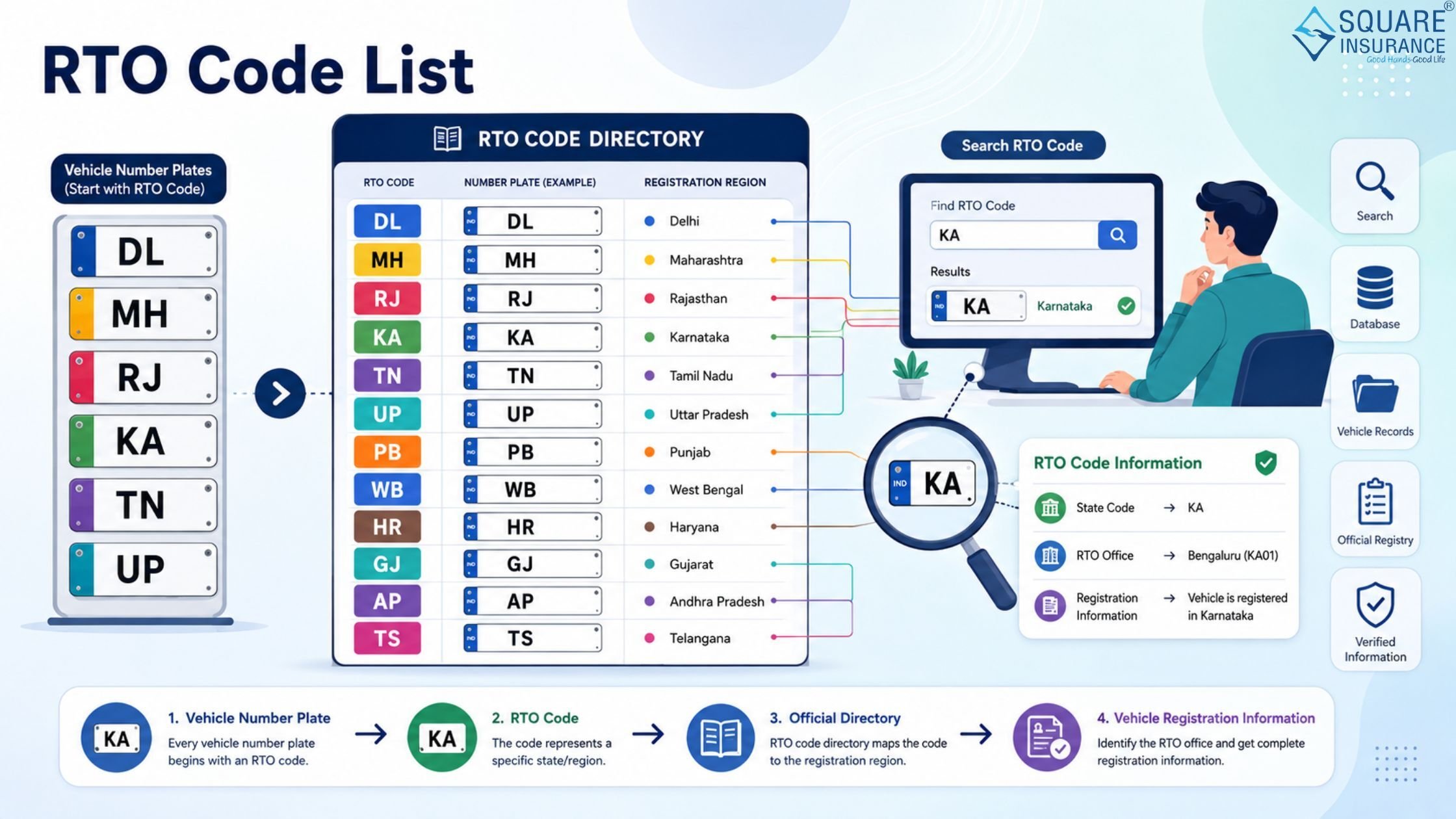
What Is an RTO Code?
An RTO code is a unique identification code assigned to a Regional Transport Office. It generally appears as part of a vehicle's registration number and helps identify the state or Union Territory and the specific RTO where the vehicle was registered.
For example, a registration number may look like RJ-14-AB-1234. Here:
- RJ represents Rajasthan.
- 14 identifies the specific RTO jurisdiction.
- AB represents the registration series.
- 1234 is the unique registration number of the vehicle.
The first two letters indicate the state or Union Territory, while the following numbers represent the concerned RTO. This systematic structure makes vehicle identification and registration administration more organised.
All India RTO Code List
India has hundreds of RTOs spread across different states and Union Territories. The following table provides a state-wise overview of commonly used RTO registration codes.
|
State/UT |
Registration Code |
Example RTO Codes |
|
Andhra Pradesh |
AP |
AP-01, AP-02, AP-03, AP-04 |
|
Arunachal Pradesh |
AR |
AR-01, AR-02 |
|
Assam |
AS |
AS-01, AS-02, AS-03 |
|
Bihar |
BR |
BR-01, BR-02, BR-03 |
|
Chhattisgarh |
CG |
CG-01, CG-02, CG-04 |
|
Goa |
GA |
GA-01, GA-02, GA-03 |
|
Gujarat |
GJ |
GJ-01, GJ-02, GJ-03 |
|
Haryana |
HR |
HR-01, HR-02, HR-03 |
|
Himachal Pradesh |
HP |
HP-01, HP-02, HP-03 |
|
Jharkhand |
JH |
JH-01, JH-02, JH-03 |
|
Karnataka |
KA |
KA-01, KA-02, KA-03 |
|
Kerala |
KL |
KL-01, KL-02, KL-03 |
|
Madhya Pradesh |
MP |
MP-01, MP-02, MP-03 |
|
Maharashtra |
MH |
MH-01, MH-02, MH-03 |
|
Manipur |
MN |
MN-01, MN-02 |
|
Meghalaya |
ML |
ML-01, ML-02 |
|
Mizoram |
MZ |
MZ-01, MZ-02 |
|
Nagaland |
NL |
NL-01, NL-02 |
|
Odisha |
OD |
OD-01, OD-02, OD-03 |
|
Punjab |
PB |
PB-01, PB-02, PB-03 |
|
Rajasthan |
RJ |
RJ-01, RJ-02, RJ-03 |
|
Sikkim |
SK |
SK-01, SK-02 |
|
Tamil Nadu |
TN |
TN-01, TN-02, TN-03 |
|
Telangana |
TS |
TS-01, TS-02, TS-03 |
|
Tripura |
TR |
TR-01, TR-02 |
|
Uttar Pradesh |
UP |
UP-01, UP-02, UP-03 |
|
Uttarakhand |
UK |
UK-01, UK-02, UK-03 |
|
West Bengal |
WB |
WB-01, WB-02, WB-03 |
|
Andaman and Nicobar Islands |
AN |
AN-01 |
|
Chandigarh |
CH |
CH-01 |
|
Delhi |
DL |
DL-01, DL-02, DL-03 |
|
Jammu and Kashmir |
JK |
JK-01, JK-02 |
|
Ladakh |
LA |
LA-01, LA-02 |
|
Puducherry |
PY |
PY-01, PY-02 |
The exact RTO code depends on the district or jurisdiction where the vehicle is registered. As administrative boundaries and RTO jurisdictions can change, vehicle owners should verify the applicable code with the relevant transport authority before submitting official applications.
How Vehicle Registration Numbers Are Structured
A vehicle registration number is not just a random combination of letters and digits. It follows a specific format that provides information about the vehicle's registration jurisdiction.
A typical registration number can be understood as follows:
MH-12-CD-4567
- MH: State code for Maharashtra
- 12: RTO jurisdiction code
- CD: Registration series
- 4567: Unique vehicle number
The registration number is displayed on the vehicle's number plate and is used in official records. It helps authorities identify vehicles for regulatory, taxation, enforcement, and administrative purposes.
Why Is Vehicle Registration Important?
Vehicle registration is a mandatory legal requirement for vehicles used on public roads in India. It establishes an official record of the vehicle and connects it with important information such as the owner's details, vehicle category, manufacturer, model, and registration date.
A valid registration also helps authorities maintain records of vehicles operating within their jurisdiction. In case of a vehicle sale, transfer of ownership, or change of address, the registration record needs to be updated according to the applicable procedure.
Driving an unregistered vehicle on public roads can lead to legal consequences and penalties. Therefore, vehicle owners should complete the registration process within the prescribed timeframe after purchasing a new vehicle.
What Services Are Provided by an RTO?
RTO offices provide several transport-related services for vehicle owners and drivers. Some of the major services include:
- New vehicle registration
- Issuance of Registration Certificate (RC)
- Renewal of vehicle registration
- Transfer of vehicle ownership
- Change of address in RC
- Issuance and renewal of driving licences
- Learner's licence services
- Addition of a new vehicle class to a driving licence
- Issuance of duplicate RC
- Hypothecation addition or termination
- Vehicle fitness certification
- Permit-related services for commercial vehicles
- Road tax collection
- Vehicle inspection
- Registration of transport and non-transport vehicles
The availability of online services varies depending on the state and the specific RTO jurisdiction.
Documents Generally Required for Vehicle Registration
The documents required may vary according to the vehicle type and registration circumstances. However, vehicle owners commonly need documents such as:
- Form 20 or applicable registration application
- Sales invoice
- Valid vehicle insurance policy
- Roadworthiness or fitness-related documents, where applicable
- Proof of identity
- Proof of address
- Temporary registration certificate, if applicable
- Manufacturer's certificate or relevant vehicle documents
- Pollution Under Control (PUC) certificate, where applicable
- Applicable road tax and registration fee payment proof
For imported vehicles or special categories, additional documentation may be required. It is advisable to check the latest requirements before visiting the concerned RTO.
How to Find the Correct RTO Code for Your Vehicle
Finding the correct RTO code is relatively simple if you know the registration location of the vehicle. First, identify the state or Union Territory where the vehicle is registered. Next, determine the district or city and identify the RTO jurisdiction responsible for that area.
The code printed on the registration number can then be matched with the relevant RTO. This information can be useful when filling out forms, checking vehicle records, transferring ownership, or understanding the registration jurisdiction of a used vehicle.
It is important to remember that an RTO code represents the registration jurisdiction and does not necessarily indicate the vehicle owner's current residential address. If the owner moves to another location, applicable rules may require updating the address or transferring the registration record.
RTO Code and Vehicle Insurance
The RTO registration details are also relevant when purchasing or renewing motor insurance. Insurers require accurate vehicle information to issue the policy correctly. The registration number, vehicle make and model, fuel type, variant, and other details may be used during policy issuance.
When buying a used vehicle, the buyer should ensure that the registration certificate and insurance policy details are properly transferred or updated. Any mismatch in vehicle information can create complications during claims or policy servicing.
Therefore, vehicle owners should keep their RC, insurance documents, and other vehicle records updated and ensure that all information is accurate.
Why You Should Keep Your RTO Details Updated
Keeping vehicle registration information accurate is essential for smooth ownership and compliance. Changes such as ownership transfer, address change, hypothecation removal, or other modifications should be reflected in official records whenever required.
Updated RTO records can make several processes easier, including insurance renewal, vehicle sale, ownership transfer, and documentation verification. Vehicle owners should also keep digital and physical copies of important documents for convenient access.
Frequently Asked Questions
Q1. What is an RTO code?
An RTO code is a unique code assigned to a Regional Transport Office. It forms part of a vehicle registration number and identifies the state or Union Territory and the concerned registration jurisdiction.
Q2. How can I identify the RTO from a vehicle number?
The first two letters of a vehicle registration number generally represent the state or Union Territory, while the following numerical code identifies the concerned RTO jurisdiction.
Q3. Is vehicle registration mandatory in India?
Yes. Motor vehicles generally need to be registered with the appropriate transport authority before they can legally be driven on public roads.
Q4. Can the RTO code change if I move to another city?
The RTO code is linked to the vehicle's registration jurisdiction. If the owner moves to another location, applicable rules may require a change of address or other registration formalities.
Q5. What documents are required for vehicle registration?
Common documents include the registration application, vehicle invoice, insurance documents, identity and address proof, applicable tax payment details, and other documents depending on the vehicle and registration type.
Conclusion
The All India RTO Code List is a useful reference for vehicle owners, buyers, and drivers who want to understand vehicle registration jurisdictions across the country. An RTO code helps identify where a vehicle is registered and plays an important role in various transport and documentation processes. From vehicle registration and ownership transfer to insurance and road tax-related requirements, keeping accurate vehicle records can make ownership more convenient.
Whether you are purchasing a new vehicle or transferring a pre-owned one, understanding the relevant RTO code and completing the necessary formalities can help you stay compliant with applicable regulations. Square Insurance can also help vehicle owners make informed decisions about their motor insurance needs and manage their policy requirements conveniently.